
Brand-First Exhibit Design: Creating Experiences People Remember
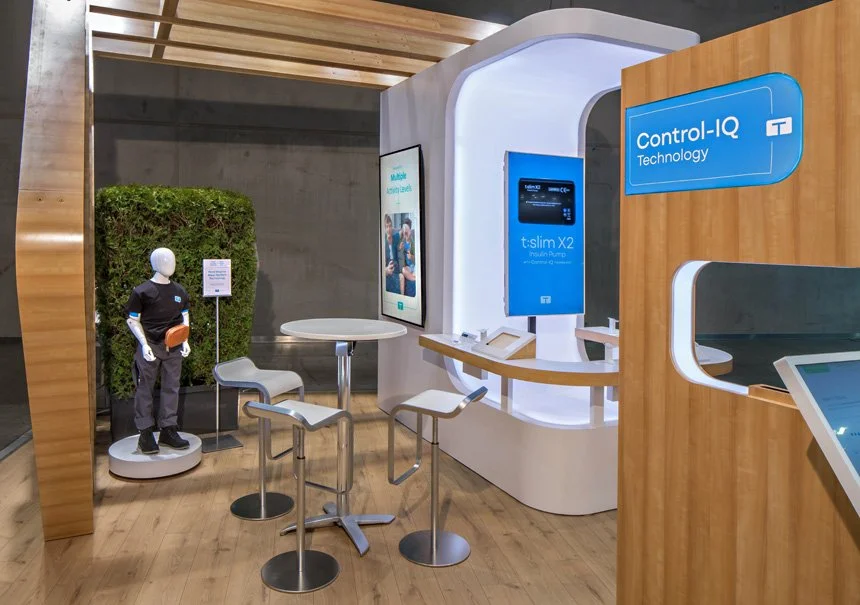
A trade show floor is a tough place to stand out.
Every exhibitor has a limited amount of space. Everyone wants attention. And increasingly, the same tools—LED walls, SEG graphics, hanging signs, interactive screens—show up again and again.
The result? An exhibit can look polished without feeling particularly memorable.
The difference often comes down to one question:
Does the experience feel unmistakably like your brand?
The strongest exhibit designs don't start with a floor plan or a collection of products and graphics. They start by understanding what makes the brand different—and finding a creative way to bring that difference to life.
Start with the brand, not the booth
Before thinking about counters, demo stations or technology, take a step back.
What does your brand stand for? What makes it different from competitors? What should an attendee understand or feel when they encounter you?
That information becomes the foundation for the design.
A useful exercise is to create a simple list of the things the exhibit needs to accomplish. Some will be functional—storage, meeting space, product displays, reception. But the more important questions are often less tangible:
What should people remember?
What should they feel?
What makes this brand different?
What idea can visually represent that difference?
Once those questions are answered, the physical design has somewhere meaningful to go.
Look for your brand's visual language
Your exhibit shouldn't feel like a generic structure with your logo applied to it.
Look for elements that can become part of the architecture itself: shapes, movement, materials, proportions, colors or patterns that have a connection to the brand or product.
For example, taking a visual characteristic of a medical product and turning it into an architectural motif throughout the exhibit. The result can be an environment that feels cohesive without relying heavily on graphics.
That's a powerful test.
If you removed the logo, would the space still feel like your brand?
If the answer is no, there's probably an opportunity to go deeper.
Give people something to experience
Memorability isn't just about what attendees see. It's also about what they do.
Interactive experiences can be more engaging when people have to discover information rather than receive everything at once. Think of your content as a progression: give attendees a reason to explore, interact and uncover the next layer.
The same principle applies to spatial design. Rather than placing a screen on a wall and calling it an experience, consider how multiple surfaces, movement, lighting and physical elements can work together to create an environment.
And don't overlook the value of quiet space. After an immersive demo or presentation, giving attendees somewhere to pause and process what they've just experienced can help the experience stick with them.
Don't let technology do the thinking
There's no shortage of new technology available to exhibitors—and that's exciting. AI, personalization, virtual environments, holographic experiences and other emerging tools will continue to expand what's possible.
But technology shouldn't become the creative strategy.
Used well, tools can help you research, visualize and execute ideas more efficiently. Used poorly, they can push everyone toward the same generic result.
The creative thinking still needs to come first.
The same goes for exhibit trends. By the time everyone is using the latest "must-have" activation, it may already be losing its impact.
The goal isn't to be memorable simply because your booth had something unusual. It's to be memorable for a reason that reinforces your brand.
That's the real opportunity in exhibit design: creating an experience that feels different because it is different—not simply because it looks different.
Start with your brand. Understand what makes it worth remembering. Then build the experience around that idea.
When the design, technology, messaging and human experience all work together, your booth becomes more than a space on the show floor. It becomes an expression of your brand that people can see, experience—and hopefully remember long after the show is over.